Together with Tesus, Scandic has developed a online training course on safety and security. The content is based on surveys that capture typical difficult situations, along with effective ways to prevent and manage them. Filmed scenes are interspersed with interviews with employees from across the group, analysis with Tesus experts, knowledge tests and interactive scenarios. Scandic's safety and security training was launched in autumn 2022.
When I was out visiting our hotels and meeting employees and managers, they told me they wanted more knowledge about how to handle threats and violence. Just as in society at large, all kinds of people pass through our hotels, and being able to manage interactions and resolve conflict is essential in every encounter. Our hotels are spread across the whole country and so are our employees, which makes it a challenge to bring everyone together for classroom training. A digital course suits us perfectly. The training is mandatory for all our employees, and it's been very well received.
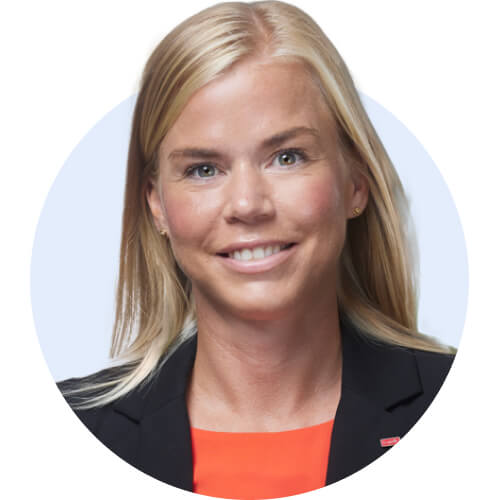
The safety of our employees and guests is our top priority. We must always maintain a strong safety culture, and our hotels must always be a safe place. When our employees feel secure, it helps ensure that any incidents can be handled calmly on the spot — and not escalate. We firmly believe that if our employees have the right knowledge, tools and practice, the chances of them managing any incidents that arise will increase. It usually comes down to understanding and good communication.
The course has been integrated into our intranet and our established learning environment, "Scandic Academy", and is mandatory for all employees to complete once a year. We also promote it alongside other work environment and safety training. Together, we've managed to capture the right situations and the right level in the course, which makes it feel relevant.
Many people are curious about the hospitality industry, and we frequently welcome new colleagues. The course is ideal for new employees, as it gives them an idea of what, although rare, can actually happen.
The training is subtitled in both Swedish and English, and where there are language difficulties we run it in groups, pausing to discuss each section. In traditional classroom teaching, it can be hard for everyone to have a voice, particularly if participants are still learning Swedish.
This course can easily be split into short sections and delivered in small groups, where participants feel more comfortable discussing and sharing their thoughts.
Historically, we've worked more locally to identify and arrange suitable, relevant training. Now, with a single course covering all our hotels in Sweden, we can ensure that important and relevant knowledge reaches every one of our employees.
And as a Scandic employee, you should feel reassured that we've developed a course to help us become even better at handling the situations that can arise in our day-to-day work.
The course has prompted plenty of reflection, discussion and suggestions for themes we could explore as deeper or follow-up modules — so we plan to keep the training alive by gathering input from our employees, to ensure it remains relevant over time.
Sweden is currently in a tense security climate that can create anxiety. The training, however, has helped us lay a solid foundation for our safety and security work and for how we talk about these issues without causing alarm.
Generally, we work a great deal with digital training at Scandic, but this major course is the first digital training in the safety and security area that we've developed for employees across the entire Swedish organisation. Both leadership and employees are talking about it. At around the same time, we launched a new digital reporting system, which was very well-timed. The course addresses the value of having the courage to raise issues and incidents with your manager — and as a result, we're seeing more incidents being reported, which matters to us.
We have a great culture at Scandic, with strong openness and a good safety culture, which means we're not afraid to talk about these things.
We've had really wonderful feedback. I've heard people use words like "the best training we've ever had". It has a strong recognition factor because it's based on our own reality, and that means our employees genuinely take the message on board. They appreciate that it's tailored to Scandic and our world, and it shows that we've invested time and energy in making the course excellent — and that we care about everyone's safety. Through the pre-study, filmed scenes and interviews, we've succeeded in capturing what our employees actually need. Recognising the situations gives a sense of reassurance. I haven't heard a single negative thing about the course. We're delighted with it.
What I'm most pleased about is how well it was received. Our employees genuinely think it's a great course. They take away things they can use in their everyday work.
It's excellent for our business and hit the bullseye. For example, it works really well when Alexander Tilly and Erik Jönsson sit and discuss the scenes that have just been shown. We don't want to alarm anyone when we're talking about difficult situations — we want it to translate into a greater sense of security, and we've truly succeeded in that. Here, safety and security topics are handled with warmth.
I knew Alexander Tilly from before. We did, of course, compare them with other digital training options — more generic ones, animated formats, a few quick-question courses. You can put together a simple course just to tick a box, but then there's no guarantee anyone will engage with it. With this, we got tailored filmed scenes and interviews, plus subject-matter experts who could contribute genuine insight on what you can do yourself to influence your own safety — not just "call the police" tips.
The result was a really strong 60-minute course. That's fairly long for a digital format, and we had discussions beforehand about whether it might be too long. But an hour turned out to be ideal — because the content is good and relevant, the course stays engaging the whole way through.
The collaboration worked brilliantly and the result was something of a success. You did a lot of the work on the surveys, scripts and filming — so it's been excellent. It was very easy to work with you.